
High beverage costs eat your margins every single day. Watery drinks ruin the customer experience, yet standard machines run up utility bills. Choosing the wrong ice shape quietly destroys your operating profit.
The best ice shape balances drink quality, melt rate, and cup displacement. Half cubes and nuggets maximize beverage displacement to reduce pour costs in fast-paced venues. Full cubes and gourmet ice preserve craft drinks through slow dilution, while flake ice delivers rapid cooling and protective packing density.
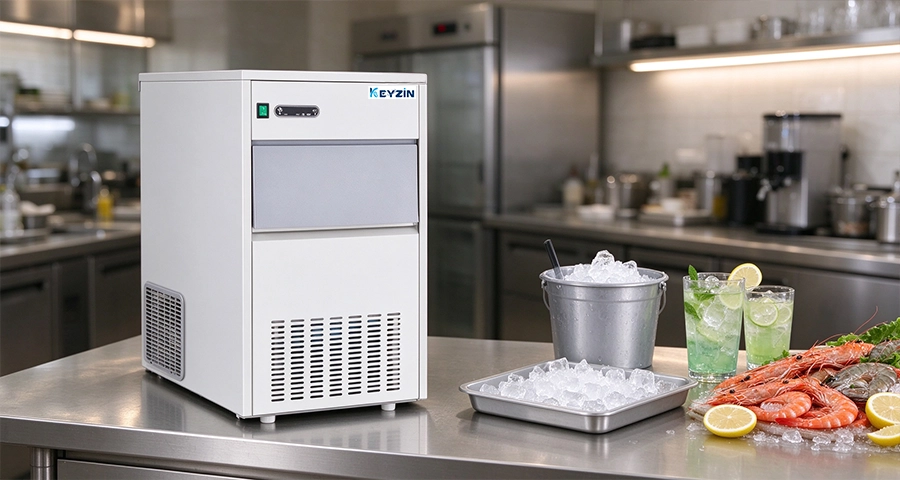
I see many bar operators struggle with diluted drinks and runaway costs. The choice of an ice machine dictates your profit margin on every single pour.
Full Cube vs. Half Cube: Which Ice Type Delivers the Best Pour Yield?
Busy bars burn through syrup and liquor stock fast. Watery cocktails drive away your best guests, but slow-filling ice makers stall service. You lose both beverage revenue and patron trust.
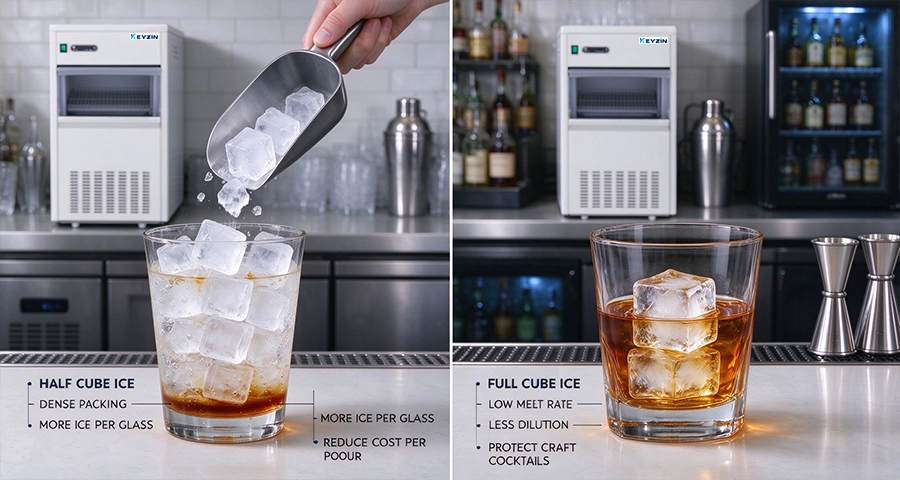
Half-cube ice packs tightly to displace more liquid, which drops fountain syrup and beverage costs in high-volume settings. Full-cube ice has a lower surface area, melts much slower, and protects premium spirits and craft cocktails from rapid dilution.
Displacement and Melt Dynamics
I run factory tests on these shapes every week, and the physical results never lie. Half-cube ice has flat faces that nest close together in a glass. This tight pack displaces more liquid per cup than large cubes. As a result, your team pours less soda syrup and base liquid while still handing over a completely full cup.
Full cubes have a much smaller surface-area-to-volume ratio. They melt slowly in alcohol. I always tell craft bartenders to keep full cubes in their rail wells. When a patron orders premium bourbon, fast-melting ice ruins the spirit. Full cubes hold the chill and stop early dilution.
| Ice Type | Melting Rate | Liquid Displacement | Primary Venue Application |
|---|---|---|---|
| Half Cube | Fast to Moderate | Very High | Fast Casual, Soda Fountains, Nightclubs |
| Full Cube | Slow | Moderate | Craft Cocktail Bars, Whiskey Lounges, Fine Dining |
Half cubes also chill drinks down below 34°F (1°C) almost instantly. This rapid chill locks carbonation into the liquid and stops carbon dioxide breakout at your soda guns. You get crisp soda and zero foaming waste.
Nugget & Chewblet Ice: Why Is Soft Ice So Profitable for Modern Venues?
Fountain drinks often yield poor profit margins when ice does not fill the cup properly. Hard cubes can also present genuine choking hazards in patient care areas, creating real safety risks.
Nugget and chewblet ice uses compressed flake crystals to absorb beverage flavor and displace maximum liquid per cup. This soft texture delivers the highest profit margins in fast-food settings while providing safe, chewable hydration for hospital patients.
Beverage Margin Expansion and Patient Safety
I spent time observing high-volume drink stations to measure syrup savings. Nugget ice features a porous structure made of compacted ice flakes. Customers love to chew on it because it soaks up drink flavor. Because these small nuggets fill every open gap in a paper cup, they displace huge amounts of liquid. Fast-food operators gain their highest gross profit margins by using this specific shape.
In hospital wards, this soft texture solves a major medical safety problem. Hard square cubes can choke elderly patients or children. Nugget ice is soft and easy to crunch. It allows nurses to hydrate postoperative patients without introducing choking dangers.
| Feature | Nugget Ice Performance | Operational Benefit |
|---|---|---|
| Crystal Structure | Compacted porous flakes | Soaks up beverage syrup |
| Chewability | Soft and airy | Safe hydration for hospital care |
| Evaporator Style | Continuous auger extrusion | Conserves water and power |
These machines use continuous auger systems rather than standard freezing grids. They do not run hot-gas defrost cycles. You can save up to 15% on electricity bills while conserving water across daily operations.
Gourmet / Top-Hat Ice: Why Does Slow Dilution Matter in Fine Dining?
Cloudy, fast-melting ice makes expensive drinks look cheap and taste flat. Discerning patrons notice mineral clouds right away, and quick dilution damages the reputation of your cocktail program.
Gourmet top-hat ice is formed by spray jets that remove trapped air and dissolved minerals. This process creates crystal-clear, dense ice that melts slower than standard cubes, keeping high-end cocktails and spirits at peak flavor.
Clarity, Freezing Technology, and Utility Demands
I often show restaurant managers how spray-jet evaporators operate under load. The machine sprays fresh water upward into inverted cups. As the water freezes from the outside in, heavy minerals and air bubbles fall back down into the basin. Only pure water molecules bind to the frozen bell shape.
The final piece of ice looks like pure glass. Because it contains no trapped oxygen bubbles, it provides an exceptionally dense mass. It cools expensive liquor without altering the intended alcohol-to-water ratio. However, these spray systems flush away mineral-heavy water. You must plan for higher water consumption and run strict water filters to stop scale buildup on internal spray jets.
| Metric | Gourmet / Top-Hat Ice | Standard Grid Cube |
|---|---|---|
| Visual Clarity | 100% Crystal Clear | Clear with slight cloudy core |
| Water Purge Rate | 30% to 50% runoff | 10% to 15% runoff |
| Melting Longevity | Maximum durability | Standard durability |
I advise luxury restaurant teams to treat top-hat ice as a core ingredient. It preserves the flavor integrity of spirits that sell for thirty dollars a pour.
Flake Ice: How Does Soft Ice Protect Fresh Food and Meat Processing?
Sharp, hard ice cuts delicate seafood skin and leaves warm air gaps across food displays. In food processing, friction heat breaks meat emulsions and ruins product batches.
Flake ice forms flat, soft flakes with a 70% to 75% ice-to-water ratio. It packs tightly around fresh seafood and produce without bruising surfaces, while providing fast temperature control for commercial meat cutters.
Cold Contact Area and Emulsion Protection
I spent weeks working with commercial meat packing lines to resolve temperature spikes during mixing. High-speed bowl cutters generate heavy friction heat in seconds. If the meat mixture gets too warm, fat separates from the protein, and the entire batch fails. Flake ice acts as a direct thermal shield. It melts instantly into the mix, drops the temperature, and leaves zero hard chunks that could damage sharp steel blades.
For fresh fish displays, flake ice lays flat like soft snow. Hard square cubes press against delicate fish skin and leave dark bruises. Flake ice packs smooth around fresh fish bodies. It seals out ambient air and maintains complete cold contact across the entire storage bed.
| Application | Mechanical Function | Practical Value |
|---|---|---|
| Seafood Display Beds | Flat, moldable contact | Stops skin tears and seals cold |
| Commercial Meat Chopping | Rapid melt absorption | Prevents heat-based emulsion failure |
| Salad Bar Preservation | Gentle base packing | Keeps crisp greens fresh without freezing burns |
Flake machines use a vertical freezing drum and a rotating scraper. The machine operates continuously without harvest pauses, which keeps fresh flake output steady all day long.
Conclusion
Matching ice shapes to your menu boosts drink margins, protects food quality, and cuts utility costs. Choose your ice type by balancing melt speed against cup displacement.