
Commercial kitchens generate airborne grease and dust every day. Dirty coils trap heat, push head pressures up, and burn out expensive compressors fast. You face huge repair bills and food spoilage.
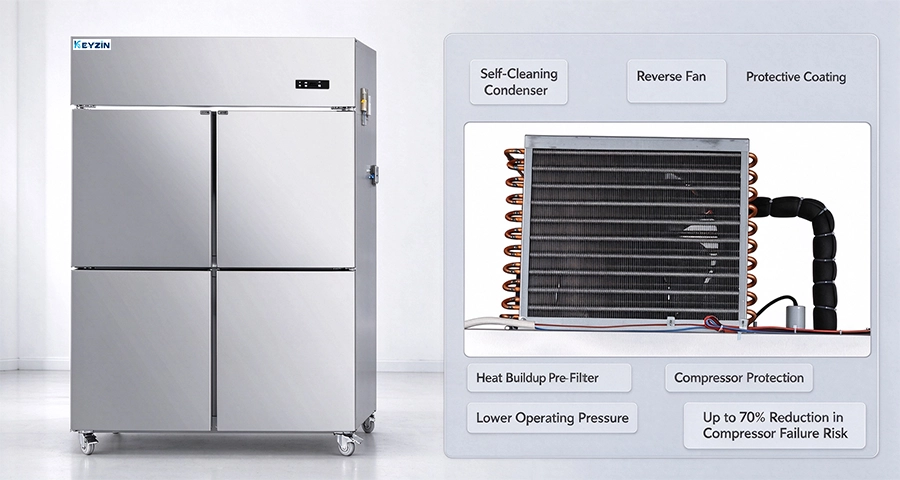
Self-cleaning condenser systems protect compressors by clearing surface debris automatically through reversing fans, protective coatings, or fine-mesh pre-filters. These mechanisms stop excessive heat buildup, lower running pressures, and cut compressor breakdown risks by over seventy percent in heavy-duty commercial operations.
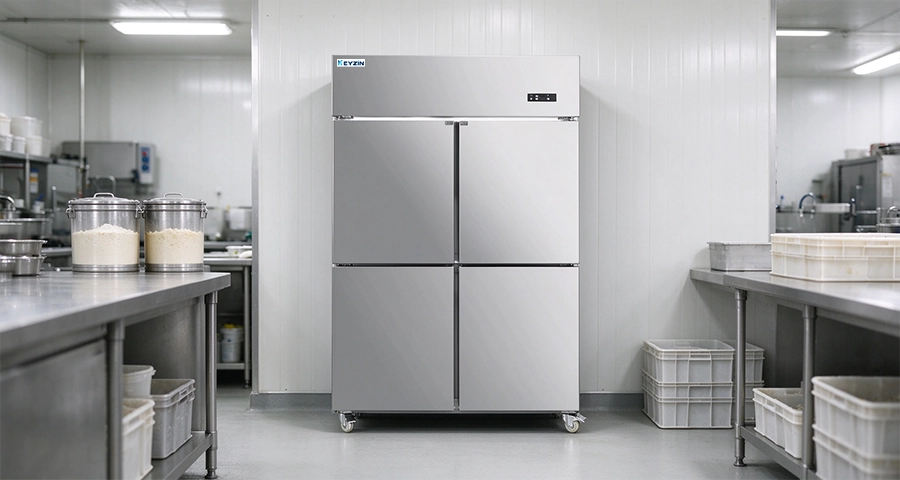
I run two manufacturing plants, and I inspect damaged cooling units constantly. A clogged coil destroys the mechanical heart of your cooler faster than almost any other operational issue.
What Is the Real Cost of Clogged Condensers in Commercial Kitchens?
Kitchen operators often skip basic condenser cleaning to save time. Heat builds up fast inside the sealed system, and the motor runs non-stop until parts crack. You lose cold storage instantly.
A clogged condenser forces the compressor to run under extreme head pressure, which drives up kitchen power bills by twenty percent and triggers sudden motor seizure. Emergency repairs and total compressor replacements routinely cost between three thousand and eight thousand dollars per unit.
Hidden Operational Expenses and Heat Damage
I see technicians scrap commercial cooling compressors every month because operators ignore air intake paths. When dust blankets the copper tubes, the system cannot dump absorbed room heat. The pump works continuously to hit the target temperature. This extra runtime cooks the internal lubricating oil. The hot oil loses its protective film, so bare metal parts rub against each other until bearings seize. The loss goes far beyond basic replacement parts. Food stocks spoil inside warm cabinets, health inspectors issue violations, and dinner service stops. Modern R290 hydrocarbon systems use smaller gas charges and run tighter pressure limits, which means a blocked coil spikes head pressure much faster than older fluorocarbon units.
| Operational Impact | Clean Condenser Operation | Clogged Condenser Operation | Financial Consequence |
|---|---|---|---|
| Energy Consumption | Baseline efficiency rating | 15% to 25% power surge | Higher monthly utility bills |
| Discharge Pressure | Normal factory specifications | Extreme head-pressure spike | Ruptured seals and motor wear |
| Oil Viscosity | Stable fluid film lubrication | Thermal breakdown of oil | Bearing friction and seizure |
| Repair Downtime | Zero unplanned work hours | 2 to 5 days emergency repair | $3,000 to $8,000 bill plus lost food |
How Do Reversing Fans, Coated Coils, and Removable Filters Compare?
Airborne particles settle on metal fins within hours of daily kitchen operations. Standard static fins choke quickly without constant manual brushing, which drains maintenance labor and leaves equipment vulnerable to heat stress.
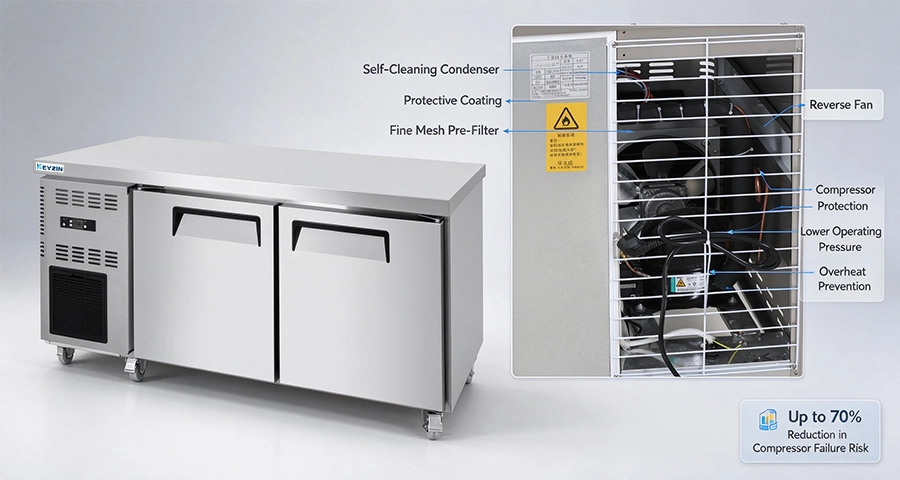
Reversing fans blow away dry lint on startup cycles, protective coatings stop corrosive kitchen steam from eating copper tubes, and removable pre-filters trap flying debris outside the cabinet. Combining these designs gives the best protection against sudden compressor thermal overloads.
Mechanical Breakdown of Defensive Cooling Technologies
I build refrigeration chassis every week, and each protective design addresses a different physical problem. Reversing fan motors change direction for thirty to sixty seconds every time the compressor starts. This reverse blast pushes loose paper scraps and dry flour away from the coil face. However, a fan blast cannot remove wet cooking oil droplets. Once oil mist lands on dry aluminum, it creates a sticky film that air cannot dislodge. Anti-corrosive coatings solve a separate chemical issue by shielding delicate metal fins from acidic vapors and moist salt. Removable pre-filters catch the bulk of airborne fluff before anything touches the internal metal, but staff must slide them out and wash them under a tap.
| Technology Type | Primary Target Material | Operational Strengths | Core Technical Limits |
|---|---|---|---|
| Reversing Fan Motor | Dry lint, flour dust, dry paper scraps | Cleans automatically on cycle starts | Cannot remove aerosolized cooking grease |
| Coated Condenser Fins | Acidic vapor, water vapor, salt | Stops metal corrosion and pitting | Does not prevent dust blanket accumulation |
| Removable Pre-Filters | Hair, large dust clods, cardboard fibers | Easy to rinse without tools | Chokes air supply completely if not washed |
What Does a Real-World Maintenance Cadence Look Like Against Zero-Maintenance Claims?
Marketing materials often promise zero-maintenance refrigeration that runs forever without tools. Kitchen staff believe the brochures and leave cabinets alone for years until the cooling deck fails completely during busy service hours.
Zero-maintenance claims are completely false because automatic fans cannot remove sticky grease deposits. Real kitchens require quick bi-weekly filter washings and hands-on quarterly or semi-annual coil washdowns with proper chemical degreasers to keep compressor operating pressures within safe factory limits.
Practical Maintenance Intervals Versus Marketing Claims
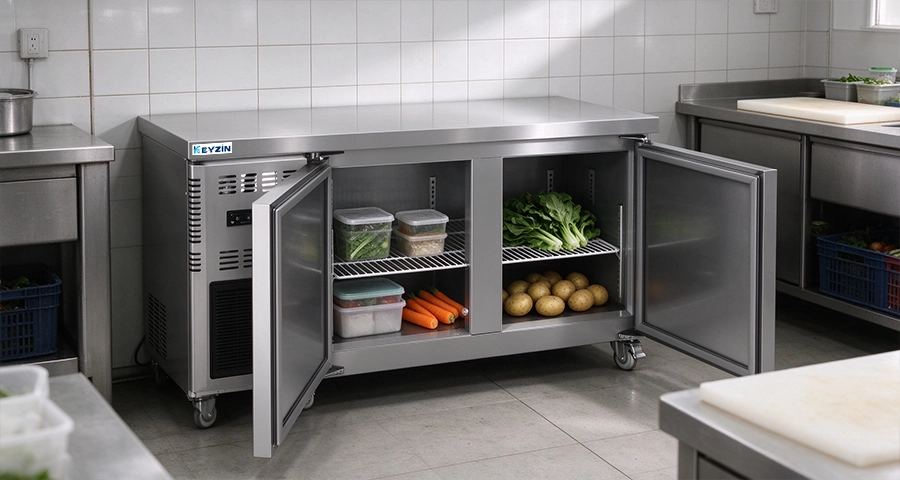
I always tell equipment owners to verify what happens behind the lower access grille. In bread bakeries, dry flour dust flies constantly, so reversing fans work very well. In burger joints or wok stations, hot oil vapor floats everywhere and coats everything. When grease hits hot condenser fins, it forms an insulating glue that traps dry dust. A reversing fan simply blows across this hardened crust without dislodging it. A neglected fine-mesh pre-filter is just as dangerous as an open fin pack. When kitchen staff ignore a pre-filter, grease seals the fine mesh shut and suffocates the compressor faster than open fins would. You must inspect the unit regularly and follow a realistic schedule.
| Kitchen Operating Setting | Airborne Contaminants | Daily Automatic Function | Manual Service Frequency |
|---|---|---|---|
| High Grease / Fryer Line | Vaporized oil, steam, heavy dust | Timed reversing fan cycles | Rinse filter bi-weekly; degrease coil quarterly |
| Bakery / Dough Preparation | Fine dry flour, yeast, packaging dust | Reversing fan airflow blast | Vacuum pre-filter weekly; wash coil semi-annually |
| Cold Prep / Beverage Station | General ambient room lint, dirt | Automatic mechanical sweep | Inspect monthly; rinse condenser every six months |
How Can You Explore Refrigerators Engineered with Condenser Defense?
Purchasers often look only at storage capacity and cabinet footprint while ignoring internal machinery layouts. Standard refrigeration decks hide coils in cramped corners, making maintenance hard and causing early equipment death.
Evaluate commercial refrigerators by checking for timed reversing fans, front-accessible sliding pre-filters, and open airflow passages. Picking units with built-in condenser defense mechanisms ensures stable heat rejection and protects your compressor investment against heavy kitchen wear.
Structural Architecture for Long-Term Compressor Defense
I inspect factory cooling designs to verify that maintenance workers can reach critical components quickly. If a service technician must remove six stubborn screws just to view a coil, nobody will clean that unit. Look for slide-out condensing units mounted on front service tracks. High-grade systems combine automated physical sweeps with timed reverse air bursts to protect the heart of the machine. The electrical controls should cycle the fan in reverse at every compressor shutdown to purge warm air pockets. Make sure the chassis includes a dedicated high-pressure cutoff switch. If grease blocks the airflow, this safety switch cuts power before the refrigerant pressure ruptures internal valves or melts the motor windings.
| Engineering Feature | Mechanical Function | Compressor Protection Benefit | Service Accessibility |
|---|---|---|---|
| Slide-Out Power Deck | Entire unit pulls forward on tracks | Allows thorough coil washing from all sides | Front access with two thumb latches |
| High-Pressure Safety Cutoff | Monitors discharge line pressure | Kills motor power before thermal burnout | Automatic sensor with manual reset button |
| Micro-Channel Tubing Pack | Flat aluminum tubes with high surface area | Dumps heat rapidly in compact spaces | Requires regular soft-bristle cleaning |
| External Mesh Filter Track | Mounts filter outside the main cabinet | Catches lint before it touches delicate fins | Slides out in seconds without tools |
Conclusion
Automatic condenser defense cuts thermal stress and extends compressor lifespan significantly, but scheduled physical cleaning remains mandatory to eliminate dangerous kitchen grease buildup.